The Hidden Cost of Therapist Burnout
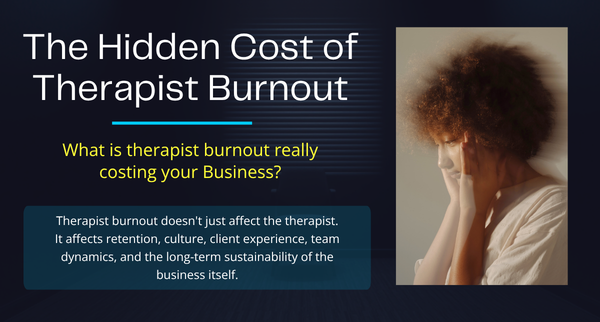
What is therapist burnout really costing your Business?
Most mental health organisations recognise that burnout is a growing issue within the field. But burnout is often viewed as an individual therapist problem rather than a business one. The conversation usually focuses on personal resilience, self-care, or workload management.
Meanwhile, many employers are quietly absorbing the operational consequences of clinician exhaustion every single day.
Because therapist burnout doesn’t just affect the therapist. It affects retention, workplace culture, client experience, team dynamics, and the long-term sustainability of the Business itself.
Burnout Often Starts Quietly
Therapists rarely wake up one day, suddenly burned out.
More often, it develops gradually through chronic emotional output without enough recovery:
-Back-to-back sessions with little time to reset
-Ongoing exposure to trauma, grief, and emotional intensity
-High caseload expectations
-Administrative overload
-Limited time for nervous system recovery during the workday
At first, clinicians may continue performing at a high level. Sessions still happen. Documentation gets completed. Clients continue receiving care. From the outside, everything can appear functional. But internally, many therapists are operating from increasing emotional depletion.
The Hidden Business Impact of Therapist Burnout
One of the biggest misconceptions about burnout is that it only affects individual well-being.
In reality, burnout creates ripple effects throughout the entire Business.
Employers may begin noticing:
-Higher clinician turnover
-Increased absenteeism and sick days
-Reduced morale across teams
-Compassion fatigue within workplace culture
-Difficulty retaining experienced therapists
-Reduced engagement and emotional presence from staff
Over time, burnout can quietly shift the emotional tone of an entire Business.
And replacing burned-out clinicians is expensive—not just financially, but relationally and culturally as well.
Therapist Burnout Impacts Client Care Too
Therapists don’t just provide interventions. They provide presence.
Clients often respond not only to clinical skill, but to the therapist’s emotional availability, nervous system regulation, and ability to stay grounded during difficult conversations.
When clinicians are chronically overwhelmed, they may begin experiencing:
-Emotional numbness or detachment
-Reduced patience and emotional bandwidth
-Difficulty fully staying present in sessions
-Greater emotional carryover between clients
-Increased exhaustion after emotionally intense workdays
This doesn’t mean they are ineffective therapists.
It means their nervous systems may be functioning in prolonged stress mode without enough opportunities for recovery.
Why High-Performing Therapists Are Often Most at Risk
Ironically, the therapists' employers value most are often the ones most vulnerable to burnout.
Highly committed clinicians tend to:
-Take on additional emotional responsibility
-Push through exhaustion
-Prioritize client needs over their own recovery
-Continue performing long after their nervous system is overloaded
Because they remain functional for so long, burnout can go unnoticed until emotional exhaustion becomes severe—or the therapist leaves entirely.
Why “Self-Care” Alone Isn’t Solving the Problem
Many Business encourage self-care, but therapist burnout cannot be solved solely through occasional wellness reminders or personal coping strategies.
Clinicians need environments that actively support nervous system recovery and sustainable workloads.
That can include:
-Reasonable caseload expectations
-Breaks between emotionally intensive sessions
-Supportive supervision structures
-Psychological safety within teams
-Open conversations around burnout and emotional well-being
-Leadership that models healthy boundaries and regulation
Without structural support, self-care often becomes another responsibility therapists feel they’re failing to keep up with.
Sustainable Therapists Create Sustainable Business
The mental health field cannot sustainably rely on clinicians functioning in chronic survival mode.
Eventually, the costs become visible:
-Increased turnover
-Staffing shortages
-Emotional exhaustion across teams
-Reduced workplace engagement
-Lower long-term retention
Businesses that prioritise therapist wellbeing are not lowering standards.
They are strengthening sustainability.
Because regulated, emotionally supported clinicians are more likely to:
-Stay engaged in their work
-Maintain strong therapeutic presence
-Collaborate effectively within teams
-Remain in the profession longer
Therapist wellbeing is not separate from Business success. It directly influences it.
Final Thought
The hidden cost of therapist burnout isn’t just exhaustion.
It’s the gradual erosion of presence, connection, retention, and sustainability that occurs when clinicians are expected to continuously give without enough support to recover.
Mental health Business cannot pour from empty nervous systems indefinitely.
And the workplaces that will thrive long-term are not necessarily the ones demanding the most output from therapists—but the ones creating environments where clinicians can remain emotionally healthy while continuing to do meaningful work.
A Question to Reflect On
What would shift in your Business if therapist wellbeing was treated as a core business strategy—not just an individual responsibility?