

Net Positive Therapy
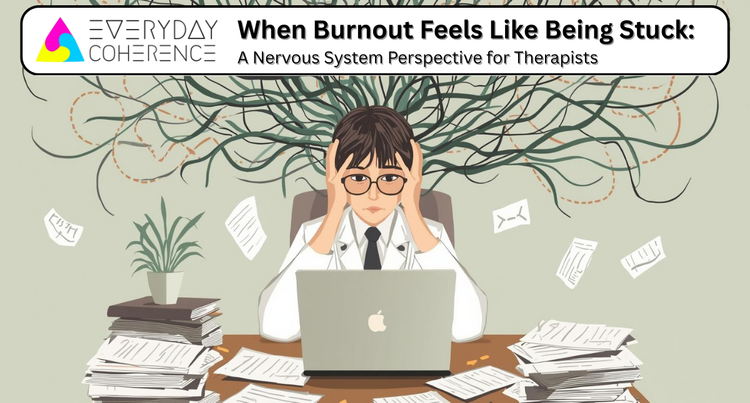
When Burnout Feels Like Being Stuck: A Nervous System Perspective for Therapists
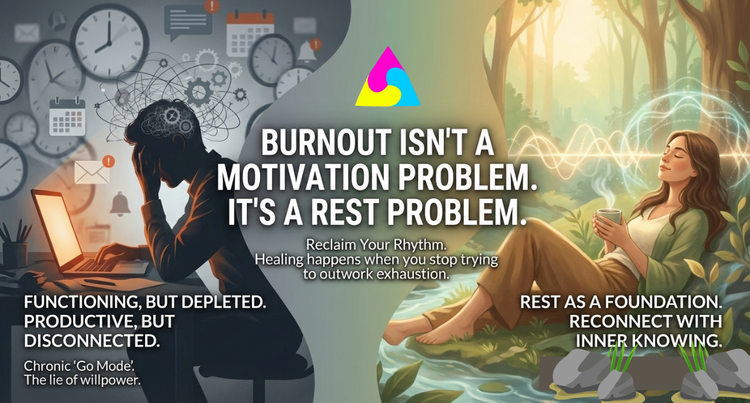


Therapist Burnout Isn’t a Motivation Problem. It’s What Happens When Therapists Forget How to Rest
When the Body Leads, the Mind Can Finally Rest: A Burnout Recovery Perspective for Therapists
Most therapists are trained to work from the mind. A top-down approach. We analyze, conceptualize, attune, track patterns, and hold complex emotional material day after day. Our intellectual skills are refined — and relied upon — constantly.
But burnout recovery asks for something different.
The full article is here 👇
Breathwork: Embodied Mindfulness for the Busy-Minded Therapist
There’s a quiet irony in being a therapist: you spend your days helping people regulate their emotions, notice their bodies, and slow down — while your own nervous system is often running a marathon in the background.
The full article is here 👇
Why Burnout Isn’t Just Exhaustion — It’s What Happens When Therapists Stop Feeling
Therapists are trained to feel—to notice, to attune, to hold space for what others are going through.
But over time, something subtle can shift.
The full article is here 👇
Why Constant Busyness Is Quietly Burning Out Therapists
Therapists don’t usually question busyness. In many ways, it’s built into the role. A full caseload means you’re helping. Back-to-back sessions mean you’re in demand. Holding space all day means you’re doing meaningful work. On the surface, it all looks aligned with purpose. But here’s where it gets complicated—being constantly “on” for others isn’t the same as being well yourself.
The full article is here 👇
The Hidden Cost of Therapist Burnout
Most mental health organisations recognise that burnout is a growing issue within the field. But burnout is often viewed as an individual therapist problem rather than a business one. The conversation usually focuses on personal resilience, self-care, or workload management.
The full article is here 👇